Becoming a certified plant operator in Canada follows a structured pathway that begins with secondary school completion and progresses through specialized training, on-the-job experience, and provincial certification aligned with your facility’s classification level. The process typically requires college or industry courses in chemistry and pollution control, followed by certification specific to your sector: water treatment and distribution, wastewater collection and treatment, or solid waste facility operations. Provincial requirements vary, with Ontario and Quebec mandating drinking water certification for operators in water treatment roles, while additional safety credentials in WHMIS and TDG may be needed depending on your facility type.
For HR professionals building operator training programs, this pathway offers clear structure but demands careful attention to jurisdictional differences and plant-specific classification levels. A Level 2 water treatment operator in Ontario faces different requirements than a counterpart in British Columbia, and these distinctions directly impact recruitment timelines, training budgets, and succession planning. Organizations that map these pathways early and align them with workforce development goals consistently report faster time-to-competency and stronger retention rates.
The certification framework addresses a pressing industry need: qualified operators remain in high demand across municipal and industrial facilities. Companies investing in structured training pathways, mentorship during on-the-job components, and clear progression from entry-level roles to advanced certifications see measurable returns in operational reliability and safety performance. Resources like Power Engineering Practice support this journey for both individual operators and the organizations developing them.
What You’ll Need to Get Started
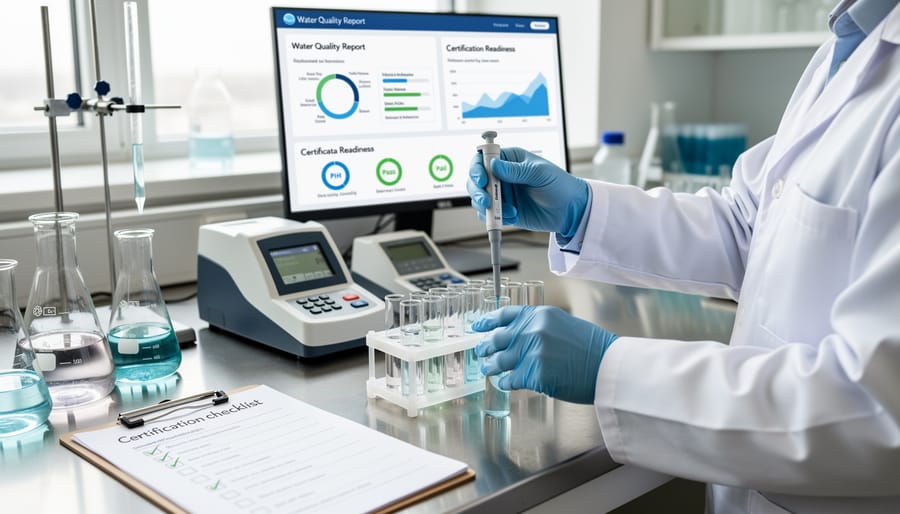
Before you pursue certification, you need to meet several baseline requirements that form the foundation of your plant operator journey. These prerequisites ensure you’re ready for the technical demands and safety responsibilities that come with operating water treatment, wastewater, or solid waste facilities across Canada.
The starting point is completion of secondary school. This educational base gives you the math and science background needed to understand plant chemistry and process calculations. From there, most operators need college or industry training courses in chemistry, pollution control, or related subjects. These programs build the technical knowledge required to manage complex treatment processes and make decisions that protect public health.
Here’s what you’ll need gathered before starting your certification path:
- Secondary school diploma or equivalent credential
- College or industry training in chemistry, pollution control, or related technical subjects
- Workplace Hazardous Materials Information System (WHMIS) certification
- Transportation of Dangerous Goods (TDG) certification
- Additional safety training specific to your facility type
- Access to on-the-job training through an employer or training placement
The safety certifications are particularly important. WHMIS and TDG training prepare you to handle the chemicals and hazardous materials you’ll encounter daily in plant operations. These aren’t optional add-ons; they’re required certifications that protect you, your colleagues, and the communities your facility serves.
Don’t expect to complete all prerequisites before landing your first position. Many operators begin with secondary school completion and basic safety training, then pursue specialized college courses while gaining practical experience through on-the-job training provided by their employer. This parallel approach lets you earn while you learn and apply classroom concepts immediately in real facility settings.
Understanding Plant Operator Certification Types
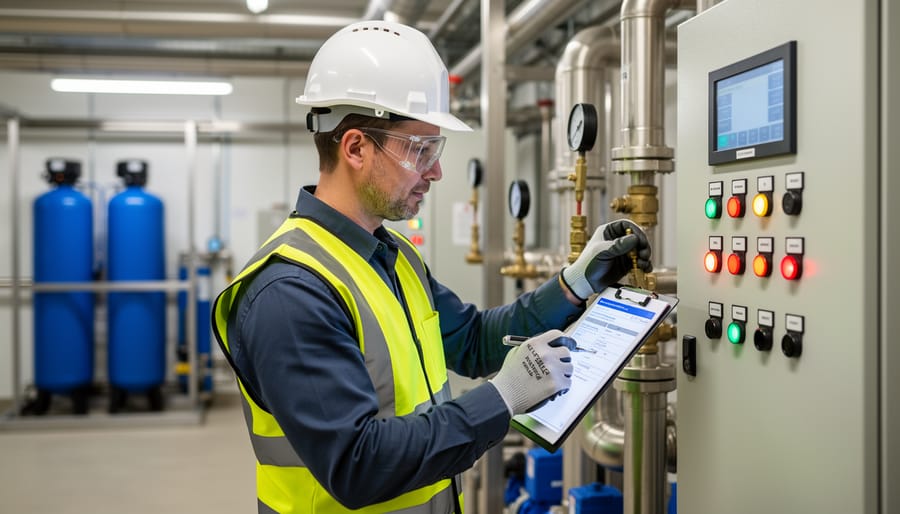
Plant operator certification in Canada divides into three main streams, each designed for the distinct technical demands of different facility types. Your chosen stream depends on where you intend to work and what processes you’ll manage.
Water Treatment and Distribution certification covers operators who ensure drinking water meets safety standards. This stream addresses processes like filtration, disinfection, chemical treatment, and distribution system monitoring. Operators certified in this stream work at municipal water treatment plants and pumping stations, managing the infrastructure that delivers potable water to communities.
Wastewater Collection and Treatment certification applies to operators handling sewage and industrial wastewater. This stream encompasses collection systems, biological treatment processes, sludge management, and effluent discharge monitoring. These operators work at wastewater treatment facilities where they manage the processes that clean water before returning it to the environment.
Solid Waste, Landfill, and Compost Facility Operations certification serves operators managing waste disposal and processing sites. This stream may be required depending on your employer and facility type. Operators in this stream oversee landfill operations, composting processes, leachate management, and gas collection systems.
Within each stream, certification levels correspond to plant classification. Classification reflects facility complexity, treatment capacity, and the technical sophistication of processes used. A small rural water treatment plant using basic chlorination operates at a lower classification than a large urban facility employing multi-stage filtration, UV disinfection, and advanced monitoring systems.
Your certification level must match or exceed your plant’s classification. Entry-level certification qualifies you for simpler facilities, while higher classifications require more extensive training, experience, and demonstrated competence. This tiered approach ensures operators possess the knowledge appropriate to the complexity of systems they manage. As you gain experience and pursue additional training, you can progress to higher certification levels, opening opportunities at larger, more sophisticated facilities.
Important Considerations Before You Begin
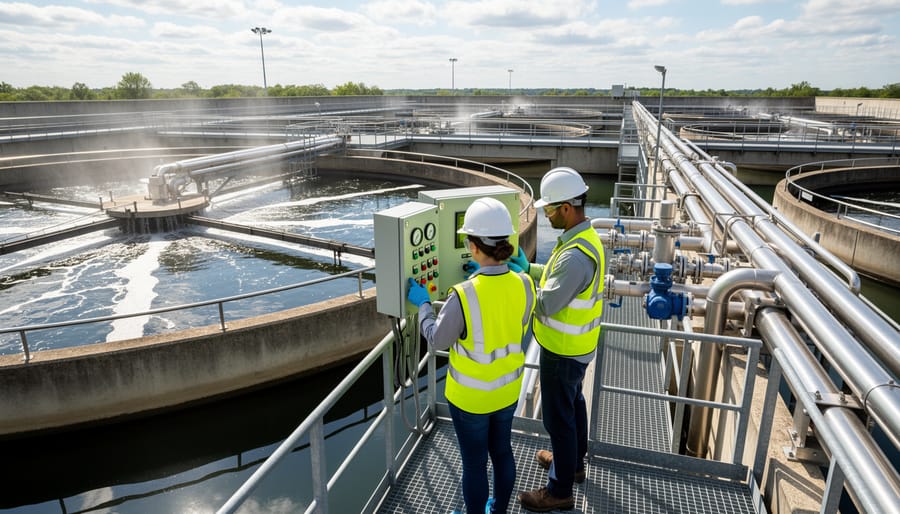
Before you commit to a plant operator career path, you need to understand which certifications are mandatory for your situation and which workplace hazards you’ll face daily. Provincial requirements differ significantly, and certain facility types carry legal obligations that go beyond voluntary credentials.
The certification you pursue must match both your plant’s classification level and your province’s regulatory framework. Water treatment and distribution operators need certification at a level that corresponds to their plant’s complexity rating, while wastewater collection and treatment operators face similar classification-based requirements. Solid waste, landfill, and compost facility operators may find certification required depending on their province and employer, though this varies more than water-related certifications.
Workplace hazards in plant operations demand respect and preparation. You’ll handle hazardous materials, work with high-pressure systems, and potentially encounter confined spaces and chemical exposure. This is why WHMIS certification, transportation of dangerous goods training, and safety practice courses aren’t just resume builders, they’re often mandatory before you can legally perform certain tasks. Employers achieve compliance through training that protects both workers and public health.
Understanding these requirements upfront prevents costly detours. If you’re in Ontario or Quebec and targeting drinking water operations, certification isn’t optional. For other provinces and facility types, verify your specific requirements early rather than discovering gaps after investing time in the wrong training pathway.
Your Step-by-Step Certification Journey
Complete Your Foundation Education
Your foundation education sets the stage for your entire certification journey. At minimum, you need a secondary school diploma or equivalent, this is a universal requirement across all Canadian provinces and plant operator roles.
Beyond high school, most successful candidates pursue post-secondary training focused on the technical knowledge plant operations demand. Look for college programs or industry courses covering chemistry, pollution control, environmental science, or water/wastewater technology. These programs teach you the science behind treatment processes, helping you understand how chemical reactions purify water, how biological systems break down waste, and why specific control parameters matter.
When selecting a program, match it to your intended plant type. Water treatment operators benefit from courses emphasizing water chemistry and distribution systems. Wastewater operators need training in biological treatment processes and collection systems. Solid waste facility operators should focus on environmental monitoring and waste management principles.
Don’t overlook fundamental safety training during this phase. Many employers and provinces expect WHMIS and TDG certifications before you start practical work, since plant environments involve hazardous materials and controlled substances. Getting these credentials early demonstrates professionalism and makes you immediately valuable to potential employers.
Your education doesn’t replace hands-on experience, that comes next, but it gives you the conceptual framework to learn faster and work safer once you’re on site.
Pursue Specialized Training Programs
Specialized training programs bridge the gap between your foundational education and the hands-on skills you’ll need at a plant. Colleges across Canada offer certificates and diplomas in environmental technology, water and wastewater treatment, and pollution control, programs typically ranging from one to two years. Look for curricula that cover chemistry fundamentals, treatment processes specific to your target facility type, and regulatory compliance frameworks.
Industry associations and private training providers also deliver focused courses tailored to water treatment, wastewater operations, or solid waste management. These shorter programs often emphasize practical applications: operating treatment equipment, interpreting lab results, troubleshooting process issues, and maintaining safety protocols. The best programs include lab work or simulations that mirror real plant conditions, giving you experience with the systems you’ll eventually run.
When evaluating options, check whether the program aligns with the certification level you’re pursuing and covers the technical areas your province requires. Programs designed for water treatment operators will differ significantly from those preparing you for landfill or composting operations. Ask about instructor credentials, learning from experienced operators adds invaluable context. Strong programs also connect you with employers who provide the on-the-job training required before certification, making your transition into the field smoother.
Build Experience Through On-the-Job Training
On-the-job training is where theory meets reality. Once you’ve completed your foundational education, employers provide structured practical experience that teaches you the daily operations of your specific facility type.
During this phase, you’ll work under experienced operators who demonstrate equipment operation, monitoring procedures, and troubleshooting techniques. Expect to learn sampling and testing protocols, understand control systems, and develop the judgment needed to respond to changing conditions. You’ll also gain exposure to team management dynamics as operators collaborate across shifts to maintain continuous operations.
The length of on-the-job training varies by facility complexity and certification level you’re pursuing. Water treatment plants typically structure training around their specific treatment processes, while wastewater facilities focus on collection systems and biological treatment. Solid waste operations emphasize equipment handling and environmental monitoring.
Your employer documents this training period, recording your competencies and hours worked. This documentation becomes essential when you apply for certification, as many provinces require proof of practical experience at facilities matching your intended certification level. Take this phase seriously, the hands-on skills you build here directly determine your readiness for certification and your effectiveness as an operator.
Identify Your Required Certification Level
Your facility’s size and complexity determines which certification level you need. Each plant in Canada receives a classification rating, typically ranging from Class 1 (smallest, least complex) to Class 4 (largest, most complex), based on factors like daily flow volume, treatment processes, and population served.
Start by asking your employer or supervisor for your plant’s official classification. They’ll have this on file, as it’s assigned by provincial or territorial authorities. Your certification must match or exceed this level. A Class 2 facility requires at least a Class 2 certification, though holding a Class 3 or 4 credential also qualifies you.
Different facility types follow separate classification systems. Water treatment and distribution plants use one scale, while wastewater collection and treatment facilities follow another. Solid waste, landfill, and compost operations may use different criteria again, depending on your province.
Don’t assume a higher certification always serves you better initially. Start with the level your current plant requires, then pursue advancement as you gain experience and eye larger facilities or supervisory roles.
Complete the Certification Process
Once you’ve identified your required certification level, gather the necessary documentation and submit your application through the appropriate provincial or territorial regulatory body. You’ll typically need proof of secondary school completion, transcripts or certificates from your college or industry training courses in chemistry and pollution control, and verification of your on-the-job training hours from your employer. If your facility requires workplace hazardous materials information system (WHMIS), transportation of dangerous goods (TDG), or other safety certifications, include these credentials with your application package.
The certification process varies based on your plant type and location. Water treatment and distribution operators must obtain certification matching their plant’s classification level, while wastewater treatment operators need certification in both wastewater collection and treatment corresponding to their facility’s classification. In Quebec and Ontario, drinking water certification is mandatory for operators involved in water treatment and distribution. Solid waste, landfill, or compost facility operators may need specific certifications depending on their province and facility requirements. Contact your provincial regulatory body early to confirm exact documentation requirements and any additional steps specific to your certification level and facility type.
Provincial Differences That Impact Your Path
Canada’s plant operator certification landscape varies significantly by province and facility type, creating different pathways depending on where you work. Quebec and Ontario stand out with mandatory drinking water certification for operators whose work involves water treatment and distribution, a legal requirement that doesn’t exist uniformly across all provinces. If you’re planning to work in drinking water facilities in these provinces, expect stricter regulatory oversight and formal certification processes you must complete before operating independently.
Beyond Quebec and Ontario’s drinking water mandates, certification requirements differ based on your facility classification. Water treatment and distribution operators need certification matching their plant’s complexity level, while wastewater collection and treatment operators follow a separate classification system tied to their specific plant type. Solid waste, landfill, and compost facility operators face less standardized requirements, certification may be required depending on provincial regulations and employer policies, but it’s not universally mandatory across Canada.
The classification level you pursue directly corresponds to your plant’s complexity rating, which varies by province. A Level 1 certification in one province might not align perfectly with Level 1 elsewhere, though the general principle of matching operator credentials to facility complexity remains consistent. Research your province’s specific classification system and certification body early, as application processes, fees, and renewal requirements aren’t standardized nationally. What works for operators in British Columbia won’t necessarily apply in Nova Scotia or Manitoba.
Verifying Your Certification and Next Career Steps
Your certification becomes official once you receive documentation from your certifying body, typically a wallet card and digital record. Keep both copies secure and verify annually that your credentials remain current with the issuing authority. Most provinces maintain online databases where employers can confirm operator certification status.
Maintaining your credentials requires active participation in continuing education. Expect to complete training hours every few years, with specific requirements varying by province and certification level. Document all workshops, conferences, and technical courses you attend, these hours accumulate toward renewal and demonstrate your commitment to staying current with evolving treatment technologies and regulations.
Career progression typically follows two paths: technical specialization or management advancement. Technical operators pursue higher-level certifications by working at increasingly complex facilities, mastering advanced treatment processes, or specializing in areas like instrumentation or laboratory analysis. Management-focused operators develop operator leadership skills, often taking supervisory roles that oversee shift operations or entire departments.
Employers prioritize operators who combine technical competency with reliability and problem-solving ability. Beyond certification, they value experience with computerized control systems, troubleshooting skills during process upsets, and the ability to handle stakeholder communication during compliance inspections or public inquiries. Building expertise in regulatory reporting and environmental compliance strengthens your position for senior roles.
Consider cross-training in adjacent areas, water operators learning wastewater processes, or vice versa, to increase employment flexibility. Some operators pursue dual certification streams, making themselves valuable to municipalities managing both drinking water and wastewater infrastructure. This versatility opens doors to chief operator positions and facility management roles where understanding the complete water cycle matters.
Common Questions About Plant Operator Certification
The path to becoming a certified plant operator raises practical questions that impact career planning and training decisions. Here are answers to the most common concerns aspiring operators ask.
How long does certification take from start to finish?
The timeline varies based on your starting point and chosen specialty, but most operators complete the journey in two to four years. This includes completing any necessary secondary school requirements, pursuing relevant college or industry training in chemistry and pollution control, and accumulating the practical on-the-job experience needed for your target certification level.
Can I work at a plant while completing my training?
Yes, on-the-job training is a standard part of the certification pathway and many operators earn while they learn. Employers provide practical training at facilities, allowing you to gain required experience under supervision while working toward certification.
What happens if I move to a different province?
Certification requirements and recognition vary by province, which means your credentials may not transfer automatically. Quebec and Ontario have specific drinking water certification requirements that differ from other provinces, so you’ll need to verify what additional steps the new jurisdiction requires before you can operate independently.
Do all plant operators need formal certification?
Not universally, though most do. Water treatment and wastewater treatment operators require certification matching their plant’s classification level. Solid waste, landfill, or compost facility operators may require certification depending on the facility and provincial regulations, so check requirements for your specific operation type.
Career prospects for certified plant operators remain strong across Canada. Municipal water systems, industrial treatment facilities, and waste management operations all need qualified professionals who understand treatment processes and can maintain regulatory compliance. Certification opens doors to supervisory roles, positions at larger and more complex facilities, and specialized opportunities in emerging areas like resource recovery and advanced treatment technologies.
The investment in training pays off through job security in an essential service sector. Certified operators command competitive wages, and many facilities offer advancement paths that reward additional certifications and experience. Organizations value operators who bring both technical expertise and a commitment to safety and environmental protection, qualities the certification process helps develop.
Becoming a certified plant operator in Canada requires commitment to proper training and a clear understanding of certification pathways, but the investment pays dividends throughout your career. Following the structured route, from foundational education through specialized training, on-the-job experience, and formal certification, ensures you meet industry standards and can operate facilities safely and effectively. Whether you’re entering water treatment, wastewater management, or solid waste operations, these credentials demonstrate your competence to employers and regulators alike.
The pathway isn’t identical for every operator. Provincial requirements vary, facility classifications differ, and your specific role determines which certifications you need. Yet this variety also creates opportunity. Once you understand the framework, you can chart a course that aligns with your career goals and your region’s requirements. Starting with secondary school completion and relevant chemistry or pollution control training, then building hands-on experience while preparing for certification, gives you a solid foundation for long-term success in this essential field.
If your organization needs to develop certified plant operators or upgrade existing staff credentials, customized training programs can accelerate the process while ensuring compliance with provincial standards. CSTD specializes in creating tailored training solutions that address your specific operational context, facility classification, and regulatory environment. Contact us to discuss how we can support your team’s certification journey and build the skilled operator workforce your facilities require.