Schedule daily virtual coffee breaks where team members rotate partners each week, creating cross-departmental connections that replicate water cooler conversations. Implement asynchronous recognition systems through platforms like www.simpleremotework.com where colleagues publicly acknowledge contributions, building a culture of appreciation without meeting fatigue. Establish flexible core hours rather than rigid schedules, allowing employees to work during their peak productivity windows while maintaining team overlap for collaboration.
The shift to remote work has fundamentally altered how organizations maintain workforce connection and motivation. While 73% of companies now offer remote options, many struggle with disengaged employees who feel isolated from company culture and disconnected from their teams. The challenge isn’t remote work itself—it’s the failure to intentionally redesign engagement strategies for distributed environments.
Traditional engagement tactics like pizza parties, desk drop-bys, and conference room brainstorms don’t translate to virtual settings. Remote employees need different touchpoints: structured spontaneity, visible career pathways, and autonomy balanced with accountability. The organizations thriving in this landscape have discovered that remote engagement requires more intentionality, not less.
This article presents proven strategies across four critical dimensions: fostering genuine connection, enabling meaningful autonomy, accelerating professional development, and supporting holistic wellness. Each approach is practical, immediately implementable, and designed for the realities of distributed teams. Whether you’re addressing declining engagement scores or proactively strengthening your remote culture, these tactics will help you build a workforce that’s connected, motivated, and performing at their highest level—regardless of location.
Why Remote Employee Engagement Requires a Different Approach

The Isolation Factor
When employees transition from office to remote work, they often experience a subtle but significant shift in their connection to organizational culture. The casual hallway conversations, impromptu brainstorming sessions, and shared coffee breaks that naturally build relationships suddenly disappear. Without these organic touchpoints, remote workers can quickly feel disconnected from their team’s energy and the company’s mission.
Research consistently shows that physical separation creates psychological distance. Employees working from home may struggle to read the room during video calls, miss nonverbal cues that build trust, and feel uncertain about their standing within the organization. This isolation extends beyond social connection—it affects how employees understand their role in the bigger picture and their sense of belonging.
Consider the experience of a mid-sized technology firm that saw engagement scores drop 23% within three months of going fully remote. Exit interviews revealed that departing employees felt “invisible” and “out of the loop,” despite regular team meetings. The company realized that structured communication alone couldn’t replace the spontaneous interactions that had previously fostered connection and collaboration. Addressing this isolation factor requires intentional strategies that recreate informal bonding opportunities and reinforce cultural values through deliberate, consistent touchpoints.
Visibility and Recognition Gaps
Remote work fundamentally changes how employees experience recognition. In traditional office settings, managers naturally observe contributions during meetings, catch employees solving problems in real-time, and offer spontaneous praise. When teams work from home, these organic moments of visibility disappear, leaving many employees feeling like their efforts go unnoticed.
Research shows that 29% of remote workers cite lack of recognition as their top frustration. Without the physical presence that makes contributions visible, even high performers can feel undervalued. Consider a marketing manager who once thrived on immediate feedback from leadership walking past her desk. Working remotely, she now wonders whether anyone notices her extended hours or creative solutions.
This visibility gap extends beyond individual recognition to career advancement concerns. Employees working from home frequently worry about being overlooked for promotions or development opportunities—a phenomenon some call the “out of sight, out of mind” effect. These concerns directly impact engagement and retention.
Leaders must intentionally redesign team management strategies to create visibility in virtual environments. This means establishing structured recognition systems, celebrating wins in public channels, and scheduling regular one-on-one conversations focused specifically on acknowledging contributions. When employees feel genuinely seen and valued regardless of location, engagement naturally follows.
Building Connection Through Intentional Communication
Beyond Email: Creating Communication Rituals
Email alone cannot sustain meaningful workplace relationships. Remote teams thrive when organizations establish predictable communication rituals that create touchpoints throughout the week.
Start with daily five-minute stand-ups where team members share their focus for the day and any obstacles they face. These brief check-ins create accountability without micromanagement while giving managers early visibility into potential challenges. One technology firm saw a 40% reduction in project delays simply by implementing morning huddles across distributed teams.
Virtual coffee chats offer informal connection in a structured format. Schedule optional 15-minute sessions twice weekly where employees can drop in without agenda, mimicking the spontaneous conversations that happen naturally in physical offices. Rotation schedules that pair different team members each week help break down silos and build cross-functional relationships.
Weekly team huddles should balance business updates with personal connection. Dedicate the first ten minutes to non-work conversation using prompts like “share a photo from your week” or “what are you reading right now?” This simple practice humanizes remote interactions and builds the psychological safety essential for engagement.
Consider asynchronous rituals too. A daily Slack thread where team members share wins, however small, creates positive momentum and visibility across the organization. These rituals work because they provide structure in the ambiguity of remote work, signaling that connection matters as much as productivity.
Making Video Meetings Matter
Virtual meetings don’t have to drain energy from your team. With intentional design, they can become moments of genuine connection and productivity.
Start by establishing clear camera norms that balance engagement with comfort. Rather than mandating cameras-on for every meeting, define when video adds value. Client-facing discussions and team brainstorming sessions benefit from visual cues, while update meetings may not require them. One technology firm saw engagement scores rise 23% after implementing “camera optional” for meetings under 15 minutes while keeping video for collaborative sessions.
Combat meeting fatigue by auditing your calendar. Challenge every recurring meeting with a simple question: Does this need to happen? A financial services company reduced standing meetings by 40% through quarterly reviews, freeing 6 hours per week for focused work. When meetings are necessary, keep them focused with clear agendas distributed 24 hours in advance and strict time boundaries.
Build in energizers for longer sessions. A simple two-minute stretch break or quick poll question can reset attention spans. Consider the “5-minute buffer rule” where meetings end five minutes early, giving everyone transition time before the next obligation.
Transform passive presentations into interactive experiences. Use breakout rooms for small group discussions, polling features for quick feedback, and collaborative documents for real-time input. These techniques turn attendees into active participants rather than passive observers.
The Power of Asynchronous Recognition
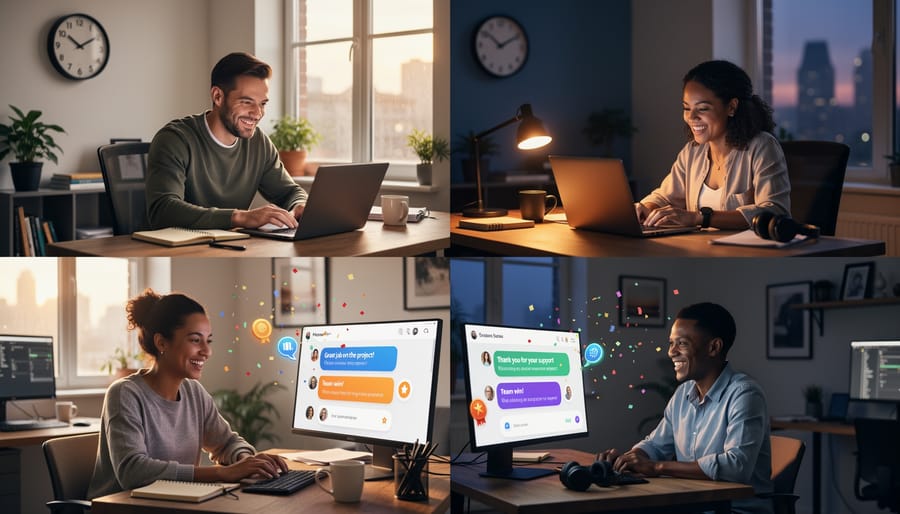
Remote work thrives on flexibility, which makes synchronous recognition challenging across time zones and varied schedules. Asynchronous recognition channels solve this by allowing team members to celebrate wins and express appreciation whenever it’s convenient.
Create dedicated Slack or Teams channels specifically for peer recognition where employees can share kudos, highlight collaborative efforts, or celebrate milestones. These digital spaces become living records of appreciation that team members can review and contribute to throughout their day. Consider implementing monthly recognition roundups where leadership acknowledges accumulated contributions, reinforcing that every acknowledgment matters.
Video messages offer another powerful asynchronous tool. A brief recorded thank-you from a manager or colleague feels personal and can be watched repeatedly, amplifying its impact. Some organizations use platforms like Loom or simple phone recordings to capture authentic appreciation moments.
One mid-sized technology company implemented a “Wins Wednesday” asynchronous tradition where team members posted accomplishments throughout the week. Participation increased by 340% over three months because the no-pressure format accommodated different working styles and schedules. The practice transformed their culture, with employees regularly checking the channel for inspiration.
The key is consistency and accessibility. When recognition doesn’t require immediate response, more people participate authentically, creating a sustainable appreciation culture that transcends physical boundaries.
Empowering Autonomy While Maintaining Accountability
Shifting from Time Tracking to Outcome Focus
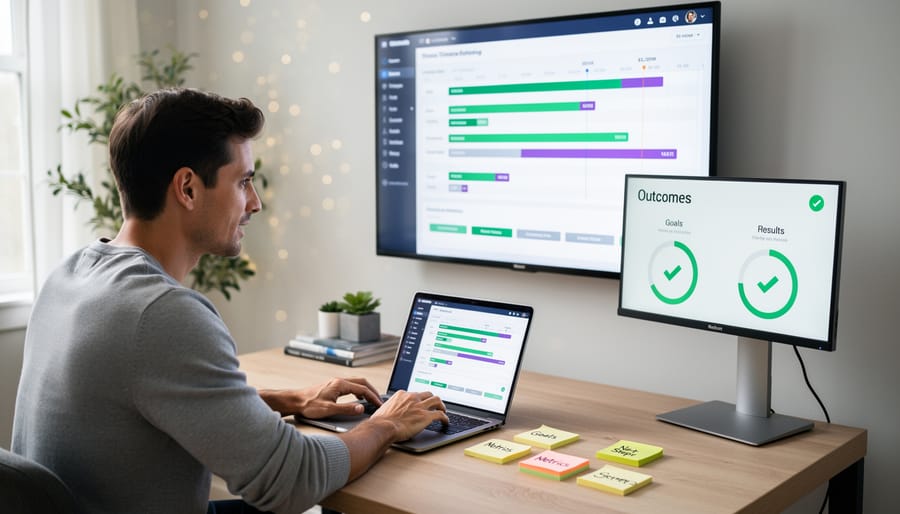
The traditional workplace emphasis on hours logged often creates counterproductive dynamics in remote environments. When employees feel their value is measured by online status rather than contributions, engagement naturally suffers. Progressive organizations are discovering that shifting to outcome-based performance creates greater accountability, autonomy, and satisfaction.
This approach requires clearly defined deliverables and success metrics for each role. Instead of monitoring when someone starts or stops work, managers focus on whether projects meet quality standards and deadlines. A technology firm implementing this shift reported a 34% increase in employee satisfaction scores within six months, as team members appreciated the flexibility to structure their workdays around personal productivity patterns.
The transition begins with collaborative goal-setting conversations where managers and employees agree on specific, measurable outcomes. Weekly check-ins then focus on progress, obstacles, and support needed rather than time spent. This framework respects employees as professionals capable of managing their schedules while maintaining high performance standards.
Leaders must also model this mindset by recognizing achievements publicly and tying rewards to results rather than presenteeism. When employees understand they’re evaluated on impact rather than optics, they invest energy in meaningful work instead of performative availability, driving both engagement and organizational effectiveness.
Creating Clear Expectations Without Micromanaging
Remote work thrives on clarity, not constant oversight. The challenge for leaders is establishing expectations that empower employees while maintaining accountability. This balance becomes the foundation for trust and sustained engagement.
Start by defining what success looks like for each role and project. Rather than prescribing how work gets done, focus on outcomes. Specify deliverables, quality standards, and deadlines, then give your team the autonomy to determine their approach. For example, instead of requiring employees to be online from 9 to 5, establish that client emails must be answered within four hours during business days. This outcome-based framework respects individual work styles while ensuring business needs are met.
Implement regular check-ins that feel supportive rather than intrusive. Weekly one-on-ones provide natural touchpoints for progress updates, problem-solving, and relationship building. These conversations demonstrate effective leadership by creating space for employees to raise concerns before small issues become major roadblocks. Keep these meetings conversational and employee-led when possible, asking questions like “What obstacles are you facing?” rather than demanding status reports.
Document expectations in writing to prevent misunderstandings. A simple project charter or team agreement outlining communication norms, response time expectations, and decision-making authority provides a reference point everyone can revisit. This documentation becomes particularly valuable when onboarding new team members or adjusting workflows.
Consider the success of a technology firm that shifted from daily stand-ups to asynchronous project updates through a shared dashboard. Employees appreciated the reduced meeting load, while managers gained better visibility into progress patterns. Engagement scores increased by 23% within six months because team members felt trusted to manage their time while still being accountable for results.
The key is creating structure without surveillance, providing enough guidance that people feel supported but enough freedom that they feel trusted.
Professional Development That Travels Anywhere
Virtual Training Programs That Actually Engage
Remote teams complete training programs that respect their time and deliver immediate value. Skip the hour-long webinars where participants multitask with cameras off. Instead, design bite-sized modules of 10-15 minutes that employees can fit between meetings or during their peak focus times.
Interactive elements transform passive watching into active learning. Build in polls, breakout discussions, and real-world application exercises throughout each session. When a technology company redesigned their compliance training with gamified quizzes and scenario-based decisions, completion rates jumped from 67% to 94% within three months.
Offer flexible scheduling that accommodates different time zones and work patterns. Record live sessions and provide on-demand access so night owls and early risers can learn when they’re most alert. Consider cohort-based learning where small groups progress together, creating accountability without rigid schedules.
Connect training directly to career advancement. When employees understand how each professional development programs supports their next role or project, engagement follows naturally. A financial services firm increased training participation by 40% after mapping every course to specific career pathways and promotion criteria.
Incorporate peer learning through virtual study groups or discussion forums. Employees often learn best from colleagues facing similar challenges. Facilitate these connections by pairing remote workers across departments for skill-sharing sessions or creating channels where they can troubleshoot course concepts together.
Digital Mentorship and Career Pathing
Remote work shouldn’t mean career development takes a back seat. When employees can’t casually chat with senior leaders in the hallway or observe leadership in action, organizations need intentional structures to bridge the mentorship gap.
Start by establishing formal virtual mentorship programs that pair remote employees with more experienced team members across departments and locations. Video-based monthly check-ins create accountability while allowing for meaningful relationship building. Unlike email exchanges, face-to-face conversations foster the trust necessary for honest career discussions.
Make career pathways transparent and accessible. Create visual career maps that outline potential progression routes, required competencies, and development opportunities for each role. Host quarterly virtual town halls where leaders share their own career journeys, including setbacks and pivots. This visibility demystifies advancement and helps remote workers see themselves in future roles.
One financial services company transformed their approach by launching “virtual coffee roulette,” randomly pairing employees across levels for informal 20-minute conversations. Within six months, internal mobility increased by 34% as employees discovered opportunities they hadn’t known existed. Participants reported feeling more connected to organizational possibilities beyond their immediate teams.
Consider implementing peer mentorship circles where small groups meet virtually to discuss shared challenges and aspirations. These horizontal relationships often provide practical insights that complement traditional top-down mentoring. Supplement these connections with accessible online learning platforms that allow employees to build skills at their own pace while documenting progress toward career goals.
Wellness and Work-Life Integration Strategies

Respecting the ‘Off Switch’
True engagement requires permission to disconnect. When remote work erases physical boundaries between office and home, organizations must intentionally create new ones. Establishing clear “off switch” policies protects employee wellbeing and paradoxically improves productivity.
Start by implementing explicit communication expectations. Define core collaboration hours when team members should be responsive, while making after-hours communication optional unless truly urgent. Some organizations use email footer reminders: “This message was sent during my working hours. I don’t expect a response outside yours.”
Technology can reinforce these boundaries. Configure collaboration platforms to pause notifications outside designated hours. Encourage employees to remove work apps from personal devices or use separate work phones they can physically set aside.
Leadership modeling matters enormously. When executives send late-night emails or praise “always available” team members, they undermine official policies. Train managers to respect boundaries themselves and recognize sustainable work patterns rather than constant connectivity.
Consider adopting “right to disconnect” policies that explicitly protect employees from retaliation for not responding outside work hours. Several companies have reported that such policies actually increased engagement scores, as employees felt more trusted and respected.
The message is simple but powerful: rest enables better work. When organizations demonstrate this belief through policy and practice, remote employees engage more deeply during working hours.
Supporting Mental Health Remotely
Remote work can amplify feelings of isolation and blur work-life boundaries, making mental health support essential for engagement. Start by normalizing wellness conversations through leadership modeling—when managers openly discuss their own mental health practices, it reduces stigma and encourages employees to seek help when needed.
Implement regular wellness check-ins that go beyond work tasks. Train managers to recognize signs of burnout, such as decreased communication, missed deadlines, or withdrawal from team interactions. These conversations should feel supportive rather than intrusive, focusing on “How can we support you?” instead of “What’s wrong?”
Provide accessible mental health resources through your existing wellness programs. This might include virtual counseling services, mindfulness app subscriptions, or mental health days without requiring detailed explanations. One technology company saw a 40% reduction in reported stress levels after introducing quarterly mental health days and expanding their Employee Assistance Program to include unlimited virtual therapy sessions.
Create psychological safety by establishing clear boundaries around after-hours communication and respecting time zones. Encourage employees to use status indicators showing when they’re unavailable, and ensure leadership honors these boundaries. Consider appointing wellness champions within teams who can share resources and normalize self-care practices. Remember, supporting mental health isn’t a one-time initiative—it requires ongoing commitment and regular evaluation to meet evolving employee needs.
Success Story: How One Organization Transformed Remote Engagement
When TechFlow Solutions transitioned to permanent remote work in early 2022, they faced a concerning reality: their employee engagement scores had dropped 23% in six months, and voluntary turnover was climbing. The leadership team knew they needed a comprehensive approach rather than scattered quick fixes.
Working with their HR team, TechFlow implemented a multi-pronged engagement strategy over twelve months. They started by establishing structured connection rituals, including weekly team huddles with non-work check-ins and monthly cross-departmental virtual coffee chats. To address isolation, they created peer mentorship circles where small groups met bi-weekly to discuss both professional challenges and personal wins.
Recognition became a priority. TechFlow introduced a peer-to-peer recognition platform where employees could award points redeemable for meaningful rewards, celebrating both major achievements and everyday contributions. Managers received training on providing specific, timely feedback during one-on-ones, which they standardized as weekly fifteen-minute touchpoints.
The company also invested in professional development by launching quarterly virtual learning days and establishing clear career pathways with remote-friendly advancement opportunities. They introduced flexible scheduling guidelines, allowing employees to design their workdays around personal productivity patterns while maintaining core collaboration hours.
To support wellbeing, TechFlow provided stipends for home office equipment and wellness apps, and implemented company-wide no-meeting Fridays for deep work.
The results were striking. After twelve months, engagement scores rebounded to 18% above pre-pandemic levels. Voluntary turnover decreased by 31%, and productivity metrics improved by 14%. Exit interview data showed a dramatic shift, with departing employees citing personal circumstances rather than workplace dissatisfaction.
Perhaps most tellingly, TechFlow’s employee referral rate tripled, suggesting their remote workforce had become genuine advocates for the organization. Their success demonstrates that thoughtful, sustained commitment to engagement strategies delivers measurable business outcomes.
The path to sustaining engagement in remote work environments doesn’t require overhauling your entire organizational structure overnight. The strategies outlined in this article—from fostering meaningful connections to supporting wellness initiatives—represent proven approaches that organizations of all sizes have successfully implemented. What matters most is taking that crucial first step.
If your organization is experiencing engagement challenges among remote employees, start with one or two approaches that align most closely with your current gaps. Perhaps your team needs stronger connection rituals, or maybe professional development opportunities have fallen by the wayside during the transition to remote work. Identify your most pressing need and build from there. Small, consistent efforts often yield more sustainable results than attempting wholesale transformation.
Remember that engagement isn’t a one-time initiative but an ongoing commitment that evolves with your workforce’s changing needs. Regular pulse checks, open dialogue, and willingness to adjust your approach will serve you well as remote work dynamics continue to shift.
For organizations seeking customized solutions tailored to their unique remote workforce challenges, CSTD brings decades of experience in organizational development and employee engagement. Our team works alongside corporate leaders to design and implement strategies that address specific pain points while building long-term engagement frameworks that adapt as your organization grows. Whether you need support with leadership development, team building initiatives, or comprehensive engagement program design, we’re here to help your remote workforce thrive.