People skills determine whether managers inspire high-performing teams or preside over quiet dysfunction. The core competencies, active listening, clear communication, empathy, conflict resolution, and coaching, can all be learned through deliberate practice and structured development. Most managers receive technical training but find themselves unprepared for the interpersonal demands that consume 70% of their workday.
The gap shows up fast. A 2025 study by the Society for Human Resource Management found that 58% of employees who left their jobs cited their direct manager’s people skills as the primary reason. The cost goes beyond turnover. Teams led by managers with strong interpersonal capabilities consistently outperform peers by 20-30% across productivity metrics, and employee engagement scores double in groups where managers demonstrate genuine relational competence.
Yet people skills remain misunderstood. Many managers assume they’re innate traits, fixed at birth, which explains why leadership development often focuses on strategy and process instead of the fundamentals of human interaction. The truth is simpler and more encouraging: these capabilities follow predictable patterns that respond to focused effort.
Consider the case of Maria Chen, operations manager at a mid-sized logistics firm. After receiving feedback that her team felt unheard and micromanaged, she committed to a 90-day development plan focused on three specific behaviors: asking open-ended questions, pausing before responding, and scheduling weekly one-on-ones. Within two quarters, her team’s retention improved from 71% to 94%, and project delivery times dropped by 18%. The transformation required no personality overhaul, just consistent application of learnable techniques that changed how her team experienced her leadership.
What You Need Before You Start
Before you can strengthen your people skills, you need the right foundation. Developing these capabilities isn’t about following a script, it requires honest self-reflection, structured feedback, and an environment that values growth over perfection.
Start with brutal self-awareness. Ask yourself: How do your team members actually experience working with you? Most managers overestimate their interpersonal effectiveness. Request specific examples from trusted colleagues about moments when your communication landed well and when it missed the mark. This isn’t comfortable, but it’s essential. Research shows that 360-degree feedback improves leadership effectiveness by revealing blind spots you can’t see alone.
Beyond initial awareness, you’ll need ongoing feedback mechanisms. Peer input, team pulse surveys, and regular one-on-ones where you explicitly ask “How can I better support you?” create the information flow that guides your development. Don’t wait for annual reviews, build feedback into your weekly rhythm.
Equally important: commit to continuous learning. Effective leadership development happens through practice, reflection, and iteration, not one-time training. Consider these essential resources:
- Self-assessment tools like emotional intelligence inventories or leadership style frameworks
- Regular feedback channels including 360 reviews and skip-level conversations
- Access to coaching or mentoring from experienced people leaders
- Learning platforms with scenario-based practice and peer discussion
- Protected time for reflection and skill practice, not just another item to manage administrative tasks
Finally, assess your organizational culture. Does your company reward results-only, or does it recognize how those results are achieved? You’ll progress faster when your environment supports people-first leadership rather than punishing the time investment these skills require.
Common Pitfalls That Undermine People Skills
Even experienced managers fall into predictable traps that sabotage their people skills and damage team dynamics. Recognizing these pitfalls helps you avoid them before they undermine your leadership effectiveness.
The authority position trap catches many new managers off guard. Relying on your title to get things done instead of building genuine influence creates compliance, not commitment. Your team follows instructions but stops bringing ideas, and engagement quietly drops. When managers lead through positional power alone, they miss the opportunity to build the trust that turns average teams into high-performing ones.
Sidestepping difficult conversations might feel safer in the moment, but avoidance compounds problems until they become crises. Managing difficult conversations requires courage, yet dodging performance issues, interpersonal conflicts, or unwelcome feedback signals to your team that accountability doesn’t matter. High performers notice when poor performance goes unaddressed, and they start questioning whether their effort is valued.
Communication inconsistency creates confusion and anxiety. When your messaging changes based on mood, audience, or convenience, team members stop trusting what you say. They waste energy trying to decode your real intentions instead of focusing on their work.
Active listening failures show up as interrupting, checking your phone during conversations, or jumping to solutions before understanding the problem. These behaviors tell your team their perspectives don’t matter. People shut down, stop contributing ideas, and only share what they think you want to hear.
Treating people skills as soft skills you’ll develop later is perhaps the most costly mistake. While you focus on deliverables and delegate or automate administrative work, relationships deteriorate. Technical excellence won’t compensate for an inability to connect with and develop your team.
Step-by-Step Process to Develop Core People Skills
Master Active Listening and Empathy

Active listening starts with eliminating distractions. Close your laptop during one-on-ones. Silence your phone. Face the person directly and maintain steady eye contact. These physical cues signal that you’re fully present, which encourages honest conversation.
Ask open-ended questions that invite depth rather than yes-no answers. Instead of “Is everything okay with the project?” try “What challenges are you facing right now?” Then resist the urge to jump in with solutions. Let silence happen. People often share their most important thoughts after a pause.
Practice reflective listening by summarizing what you heard before responding. “So you’re concerned the timeline doesn’t account for the design review phase” confirms understanding and shows you’re processing their words, not just waiting to talk.
When emotions surface, validate them without judgment. “That sounds frustrating” or “I can see why you’d feel overwhelmed” acknowledges feelings as legitimate. You don’t need to fix the emotion or agree with the perspective to recognize its reality for that person.
Paraphrasing demonstrates understanding at a deeper level. Restate their point in your own words: “It sounds like you need clearer priorities from leadership before you can move forward.”
A logistics manager at a distribution center struggled with chronic overtime complaints. She started weekly listening sessions with no agenda beyond understanding concerns. Within two months, voluntary turnover dropped by thirty percent. The issues hadn’t changed, but employees felt heard. That shift in connection transformed engagement entirely.
Communicate with Clarity and Transparency
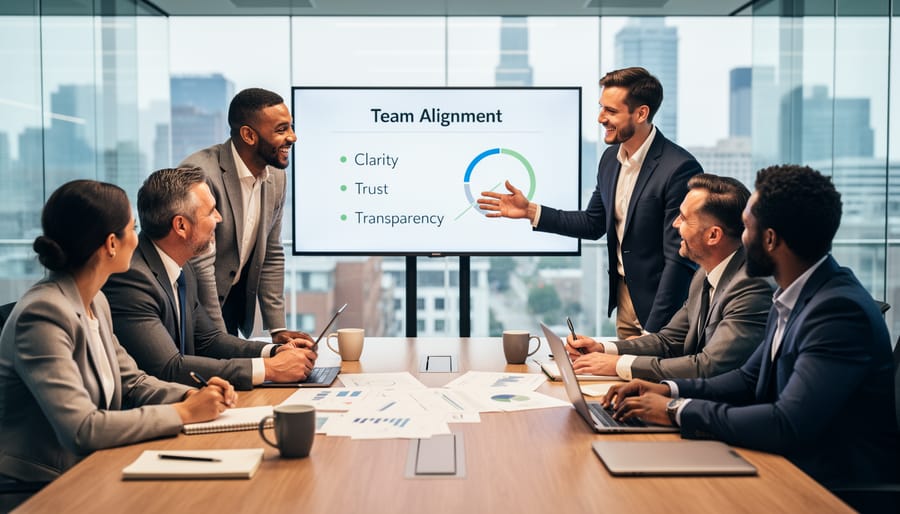
Clear communication is the bridge between your intentions and your team’s understanding. Start every assignment or project discussion by stating the outcome you need, not just the tasks. Explain what success looks like, when it’s needed, and why it matters to the larger goals. This context helps your team make better decisions when you’re not in the room.
Share the reasoning behind decisions, especially when they affect people’s work. You don’t need to justify everything, but explaining the constraints you faced (budget, timeline, strategic direction) builds trust and helps your team understand how the organization thinks. When you can’t share certain details, say so directly rather than being vague.
Recognize that your team members process information differently. Some want the big picture first, others need step-by-step details. Some prefer written documentation, others need to talk it through. Ask people how they prefer to receive important information, then adjust your approach accordingly.
Establish consistent touchpoints for feedback in both directions. Weekly one-on-ones create space for honest conversation about what’s working and what isn’t. In team settings, invite questions and dissenting views openly. When you respond to pushback without defensiveness, you teach your team that transparency is genuinely valued, not just encouraged in theory.
Build Trust Through Consistency and Authenticity

Trust forms the bedrock of every high-performing team, and managers build it through daily actions, not grand gestures. Your team watches what you do far more closely than what you say.
Start by treating every commitment as sacred. When you promise to advocate for a budget increase, follow up within days, not weeks. If you can’t deliver on a promise, explain why immediately and offer an alternative. This transparency matters more than perfection.
Own your mistakes publicly and specifically. Instead of vague apologies, say “I should have consulted you before changing the project timeline. That decision affected your weekend plans, and I apologize.” This vulnerability signals psychological safety and gives your team permission to take calculated risks.
Credit belongs where it’s earned. When presenting team wins to leadership, name specific contributors and their contributions. Resist the urge to use “we” when you mean “they.”
Show up as the same person every day. Mood swings and inconsistent standards erode trust faster than any single misstep. Your team should know what to expect from you Monday through Friday.
Consider Maria, a manufacturing team leader at a consumer goods company. After a painful restructure reduced her team by 40%, trust hit rock bottom. She rebuilt it through radical consistency: daily check-ins at the same time, honest updates about company decisions even when news was uncertain, and admitting when she didn’t have answers. Within six months, her team’s engagement scores surpassed pre-restructure levels.
Navigate Difficult Conversations with Confidence
The hardest conversations are often the ones that matter most. When you delay addressing performance issues or avoid conflict, small problems calcify into team dysfunction. Confident managers don’t wait for the perfect moment, they create it through preparation and structure.
Start by clarifying your objective. What specific outcome do you need? Write it down before the conversation begins. This anchors you when emotions run high.
Next, regulate your own state. Take three deep breaths. Check your assumptions at the door. You’re here to solve a problem together, not to prove someone wrong. Enter the room curious about their perspective, not armed with conclusions.
Open with clarity and care: “I want to talk about [specific situation]. My goal is to understand what’s happening and find a path forward together.” State the facts without judgment. Replace “You always miss deadlines” with “The last three project milestones were delivered late.”
Listen completely before responding. Ask “What’s getting in the way?” or “Help me understand your perspective.” People defend less when they feel heard first.
Focus the middle of the conversation on solutions, not blame. “What support would help?” “What can we both commit to differently?”
Close with clear next steps, timelines, and a follow-up date. Document the agreement immediately afterward.
Develop Each Team Member Individually
Start every one-on-one with a career conversation, not just task updates. Ask directly: “Where do you want to be in two years?” and “What skills do you want to build?” Then map current responsibilities to those goals. When you delegate a project, explain why you chose this person, how it aligns with their development path or stretches a capability they want to grow.
Track each team member’s strengths and growth edges in a simple document you review monthly. Notice what energizes them versus what drains them. Use that insight to distribute work thoughtfully, not just evenly. The person who excels at client relationships shouldn’t be buried in spreadsheets simply because others are busy.
Create learning opportunities tailored to individual needs: pairing someone with a mentor, assigning them to cross-functional projects, or funding a specific certification. When writing their job description for a promotion or new role, involve them in defining responsibilities that reflect their aspirations, not just organizational needs.
Shift from directing to coaching. Ask “What approach would you take?” before offering your solution. When someone struggles, resist the urge to fix it yourself. Ask what support they need and what they’ve already tried. This builds problem-solving capability and confidence.
Treat career development as an ongoing dialogue, not an annual checkbox. People grow faster when they feel genuinely seen and supported as individuals with distinct ambitions.
How to Measure Progress and Sustain Growth
Developing people skills requires measurable feedback loops to confirm you’re making progress. Start by tracking quantitative metrics that reflect team health: monitor staff engagement scores through pulse surveys, watch retention rates among your direct reports, and compare team performance metrics before and after implementing new practices. Rising engagement scores and declining turnover often signal that your improved communication and trust-building efforts are working.
Qualitative indicators provide equally valuable insight. Pay attention to whether team members now bring problems to you earlier rather than letting issues fester. Notice if they volunteer ideas more freely in meetings or approach you with personal development requests. Track how quickly conflicts get resolved and whether people admit mistakes without defensiveness. These behavioral shifts reveal genuine relationship improvement that numbers alone can’t capture.
Create a personal development plan that names two or three specific skills you’ll practice each quarter. Write down what success looks like for each skill and schedule monthly self-assessments. Ask a trusted colleague or mentor to observe your interactions periodically and provide candid feedback on what they notice changing.
Build accountability by sharing your development goals with your team. This transparency demonstrates commitment and invites them to support your growth. Schedule quarterly reviews where you ask direct reports specific questions: “Do you feel heard in our one-on-ones? Am I giving you enough context about decisions? What could I do differently to support you better?” Their answers become your roadmap for continuous improvement.
Frequently Asked Questions
Managers developing people skills often share similar concerns and questions. These answers cut through the uncertainty and provide clear direction based on what actually works in practice.
Can people skills be learned if you’re naturally introverted?
Absolutely. Introversion is about energy management, not ability. Many introverted managers excel at active listening, one-on-one conversations, and thoughtful communication because they naturally prefer depth over breadth in relationships. Focus on developing skills in settings that work for your energy style, like scheduled individual check-ins rather than constant drop-by interactions.
How long does it take to see results from improving people skills?
You’ll notice immediate changes in individual interactions when you apply active listening or clearer communication. Broader team trust and engagement typically show measurable improvement within three to six months of consistent practice. The timeline depends on your starting point, the frequency of practice, and the current state of team relationships.
What if my organization doesn’t prioritize people skills?
Develop them anyway. Strong people skills improve your team’s performance regardless of organizational culture, and results speak for themselves. Document the outcomes you achieve through better communication and relationships, then use that evidence to advocate for broader adoption. Your success becomes the business case.
How do you balance people skills with achieving results?
People skills don’t compete with results; they enable them. Teams with managers who communicate clearly, build trust, and develop individuals consistently outperform teams led by results-only managers. The question reverses the relationship: you can’t sustain strong results without strong people skills.
What’s the difference between people skills and being overly friendly?
People skills involve professional respect, clear boundaries, and genuine care for team member development. Being overly friendly often means avoiding difficult conversations, accepting poor performance to maintain likability, or blurring professional boundaries. Effective managers can be warm and approachable while still holding people accountable and making tough decisions when necessary.
These questions highlight a fundamental truth: people skills are not soft, optional, or separate from management effectiveness. They are core competencies that determine whether you can lead people to do their best work consistently.
Building people skills isn’t about changing your personality. It’s about committing to deliberate, consistent practice in how you show up for your team every day.
The managers who transform their teams don’t wait for the perfect moment or the ideal conditions. They start small. They choose one conversation to truly listen in, one feedback session to prepare more thoughtfully, one difficult conversation to approach with empathy rather than avoidance. Over weeks and months, these small choices compound into a leadership presence that people trust, respect, and willingly follow.
The impact extends far beyond individual interactions. Teams led by managers with strong people skills report higher engagement, solve problems faster, and navigate change more effectively. People stay longer, contribute more freely, and deliver better results because they feel genuinely valued and understood.
Your next opportunity is already waiting in your calendar, your inbox, or just outside your office door. Pick one technique from this guide and use it in your very next team interaction. Listen more intently. Ask a better question. Follow through on a commitment. Each conversation is a chance to build the trust and connection that makes everything else possible.